
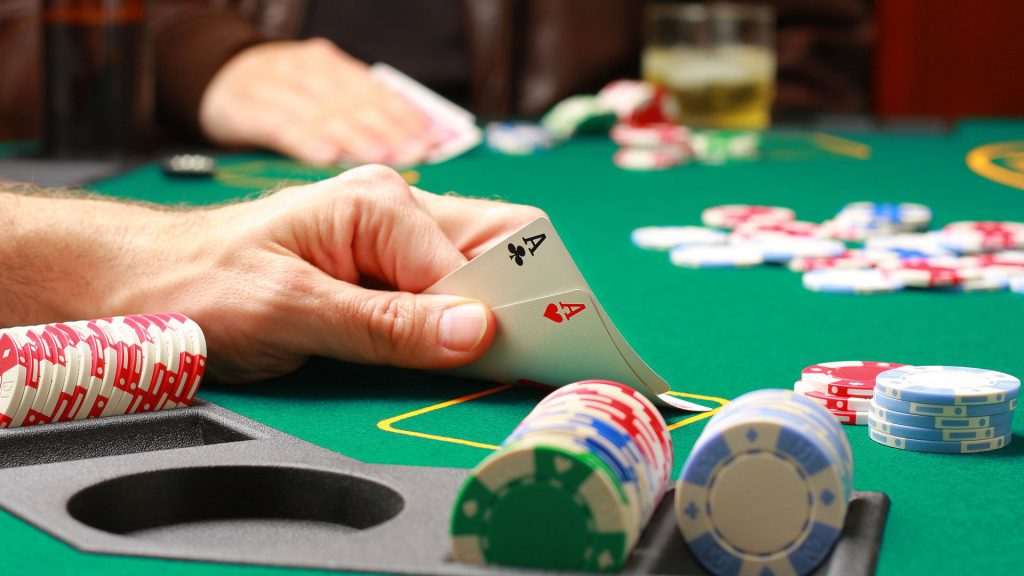
The allure of the casino floor or the digital betting interface is undeniably powerful. Bright lights, engaging soundscapes, and the intoxicating possibility of a massive payout create an environment optimized for excitement. Whether you are spinning the reels of a modern slot machine, calculatedly splitting pairs at a blackjack table, or backing a specific sports franchise, the underlying psychological engine remains identical. The human brain thrives on the anticipation of risk and reward.
The Mathematical Reality of the House Edge
To understand why walking away is a critical defensive requirement, one must first look at the cold, unyielding mathematics that power the casino industry. Every legal wagering game is intentionally designed with an integrated statistical advantage known as the house edge. This edge represents the mathematical percentage of each wager that the casino expects to retain over a long sample size.
For instance, a standard European roulette wheel features a house edge of roughly two point seven percent. This means that for every one hundred dollars systematically wagered at the table, the physics of the wheel will theoretically return ninety seven dollars and thirty cents to the collective players, while the house retains two dollars and seventy cents. In the short term, individual players can experience wild statistical anomalies, walking away with double or triple their initial money due to pure luck.
However, the laws of large numbers dictate that the longer a person plays, the closer their personal results will align with the absolute house edge. Time is the ally of the casino and the enemy of the player. The longer you sit at a table or stay logged into a betting application, the more certain it becomes that the mathematical baseline will erode your chips. Therefore, walking away while you are ahead is the only physiological way to defeat the house advantage during a single session.
The Psychological Mechanics of Chasing Losses
While leaving the table with a profit requires discipline, walking away during a losing streak demands an entirely different level of psychological resilience. When a human being experiences a financial loss, the brain interprets it as a direct threat, frequently triggering an emotional state known as tilt. Tilt bypasses logical reasoning and replaces it with an urgent, irrational desire to win back the lost funds immediately. This dangerous behavioral trap is universally referred to as chasing losses.
When you enter this cycle, your strategic structure completely collapses.
-
Escalating Bet Sizes: Players will double or triple their standard wager amounts, falsely believing that a single large win will instantly erase their cumulative losses.
-
Abandoning Game Strategy: A blackjack player who normally follows perfect basic strategy will begin taking erratic, high risk hits based on emotional desperation rather than mathematical correctness.
-
Ignoring Personal Boundaries: The isolated session budget is completely disregarded as the individual makes impulsive, successive trips to the ATM or processes multiple digital deposits.
Chasing losses is built on a cognitive error known as the gambler fallacy, the mistaken belief that because a specific negative outcome has occurred multiple times in a row, a positive outcome is somehow due to happen next. The roulette wheel has no memory; a coin flip does not care that it has landed on tails five consecutive times. Each individual event remains completely independent, meaning that throwing more money into a losing session simply increases the total size of your financial deficit.
Establishing Rigorous Financial and Temporal Boundaries
The only reliable protection against emotional decision making at the tables is the implementation of hard, non negotiable boundaries before you ever place your initial bet. If you wait until you are deep in the action to decide when to stop, your brain will already be compromised by dopamine, making objective logic impossible.
The first critical tool is the implementation of a dedicated loss limit. A loss limit is the absolute, exact amount of money you are willing to spend in exchange for the entertainment value of the session. Think of this capital in the same way you view buying a ticket to a concerts or a premium sporting match; it is money spent for an experience. Once that specific pool of chips is gone, your session is officially over. You must physically stand up, leave the venue, or log completely out of the application without exception.
Equally important, yet frequently overlooked, is the concept of a win goal. While it sounds counterintuitive to stop playing when you are feeling lucky, establishing a clear profit target protects you from your own greed. If you enter a session with a two hundred dollar bankroll, you might set a win goal of three hundred dollars. The moment your total chip count hits five hundred dollars, you cash out your chips. Walking away with a confirmed victory prevents the natural regression of the house edge from clawing back your profits during the inevitable downswing that follows a lucky streak.
Finally, you must implement strict time limits. Gambling requires intense focus, pattern recognition, and emotional restraint. As time ticks by, physical and mental fatigue set in, dulling your cognitive functions and causing you to make careless, lazy mistakes. Setting an alarm on your phone for two hours ensures you take regular, prolonged breaks away from the gaming environment to reset your mental baseline.
Recognizing the Subtle Internal Warning Signs
Knowing when to walk away also requires a deep level of personal self awareness. The human body routinely signals when it is time to exit, long before the bankroll hits zero. Learning to read these internal metrics prevents minor sessions from spiraling into major structural problems.
A primary warning sign is the complete loss of the entertainment factor. Gambling is meant to be an active choice of recreation. If you notice that you are no longer smiling, laughing, or enjoying the mechanics of the game, and are instead feeling intensely anxious, frustrated, or angry, the session has transformed into something unhealthy. Playing out of irritation or obligation is a fast track to reckless behavior.
Another critical indicator is defensive lying or hiding your activity. If you feel the immediate urge to minimize the browser window when a family member walks into the room, or if you find yourself lying to your partner about how much money you actually lost during a weekend trip, you are demonstrating an emotional conflict. Healthy recreation requires complete transparency; if a hobby forces you to hide the truth from the people you care about, it is time to walk away permanently.
Implementing Structural Safeguards in the Digital Age
In the modern landscape of legal online gambling, players no longer have to rely purely on personal willpower to maintain their boundaries. Responsible gambling frameworks have forced digital operators to integrate robust automated safety tools directly into their software cashier interfaces.
When creating an account at a reputable online casino or sportsbook, you can immediately access the responsible gaming control panel to lock in personalized restrictions. You can set daily, weekly, or monthly deposit caps that prevent the platform from accepting more capital once your budget is reached. You can also implement reality checks, which trigger automated pop-up alerts every thirty minutes to remind you exactly how long you have been logged in and precisely how much capital you have spent. For severe situations, the self exclusion mechanism allows you to legally ban yourself from accessing the platform for durations ranging from six months to several years, providing an unbreachable barrier that protects you when your personal willpower wavers.
Frequently Asked Questions
What should I do if my friends want to keep playing but I have reached my loss limit?
You must prioritize your personal financial health over social peer pressure. If your companions wish to continue betting, you can politely inform them that you have hit your limit for the evening. Instead of staying at the table where the temptation to play remains incredibly high, move to the casino lounge, grab a meal, or head back to the hotel room, allowing your friends to finish their sessions without putting your own money at risk.
Is it a good idea to borrow money to continue a gambling session if I am certain a win is coming?
No, borrowing money to fund gambling is one of the most prominent red flags of problematic behavior. You should only ever wager disposable income that you can afford to lose completely without affecting your daily life. Utilizing credit cards, personal loans, or borrowed funds from friends introduces severe real world financial stress into a high risk environment, creating a dangerous trap.
Why do casinos make it physically difficult to find the exits?
Traditional land based casinos are architecturally designed utilizing a concept known as the maze layout. By intentionally omitting windows and wall clocks, and positioning rows of glowing machines in curving, non linear pathways, operators disrupt your natural spatial awareness and perception of time. This environment is built to keep you contained within the betting zone, making it vital to actively check your phone or watch for time cues.
Does switching to a different game reset the house edge during a losing streak?
No, moving from a slot machine to a blackjack table or a roulette wheel does absolutely nothing to alter the mathematics of your past losses. While different games feature different edge percentages, each game still retains a built in advantage for the house. Changing seats might provide a brief psychological distraction, but it does not change the fact that you are still playing against a negative statistical framework.
How do I distinguish between a temporary downswing and a sign that I need to quit?
A downswing is a natural part of any variance driven game, but the decision to quit should be based entirely on your pre established boundaries rather than the current direction of your chip count. If you are still within your time limit, well within your allocated budget, and remain completely calm and logical, you are experiencing standard variance. If your emotions are flaring or your budget is empty, the distinction is clear: you must walk away.
What resources are available if I find myself completely unable to walk away?
If you discover that you cannot enforce your own limits and are continuously chasing losses despite your best intentions, professional support systems are available worldwide. Organizations such as the National Council on Problem Gambling provide completely free, confidential hotlines, text services, and online chat resources available twenty four hours a day to connect you with specialized counselors who can help you regain control.